

Introduction
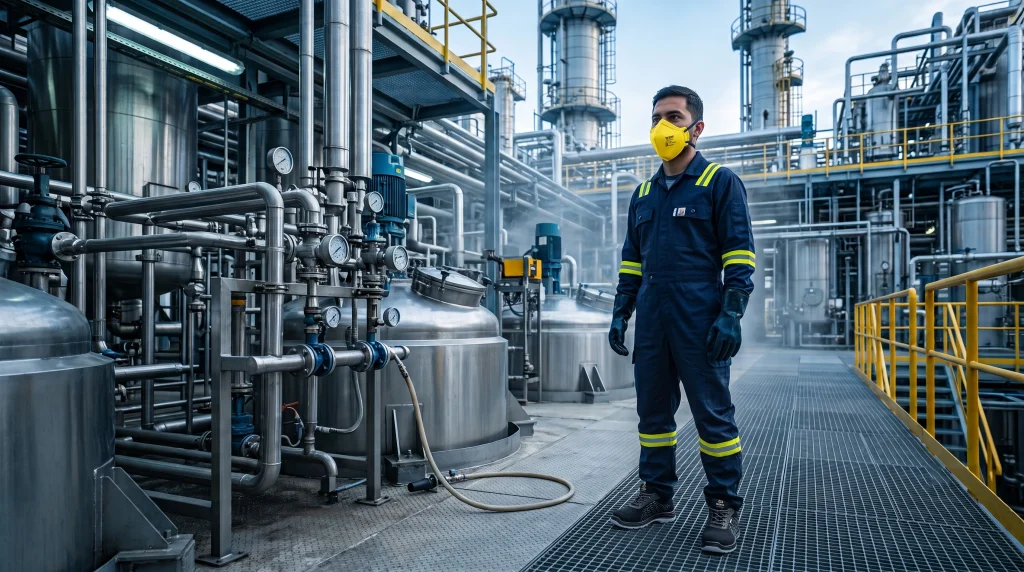
Chemical and petrochemical plants are among the most hazardous work environments in any industry. Workers face daily exposure to corrosive substances, toxic fumes, flammable materials, high-pressure systems, and extreme temperatures — often simultaneously.
A single gap in personal protective equipment can result in chemical burns, respiratory damage, or life-threatening injuries. This guide covers the complete PPE requirements for chemical plant environments — what to use, why it matters, and what to look for in each category.
1. Hand Protection — Chemical Resistant Gloves
Hands are the most exposed part of the body in chemical handling environments. Standard industrial gloves offer no protection against chemical permeation or degradation. For chemical plant applications, you need gloves specifically engineered for chemical resistance.
Key considerations:
- Material matters — Nitrile, neoprene, butyl rubber, and PVC each resist different chemical families
- Check the glove’s breakthrough time for the specific chemicals being handled
- Look for EN 374 certification for chemical protective gloves
- Thickness and cuff length should match the level of immersion or splash risk
Avoid: Standard cotton or general-purpose gloves in any area where chemicals are present.
2. Eye and Face Protection — Chemical Safety Goggles
Splash, mist, and fume exposure to the eyes can cause permanent damage within seconds. Standard safety glasses are not sufficient in chemical environments — you need sealed goggles that prevent any ingress.
Key considerations:
- Use indirect-vent or non-vented goggles for splash and fume protection
- For acid and alkali handling, look for goggles with anti-fog coating and UV protection
- Face shields should be used in addition to goggles for heavy splash risk areas
- TIGOS offers the TG-CHEMICAL and THCG-2100B specifically rated for chemical environments
Avoid: Open-frame safety glasses in any area with airborne chemical mist or splash risk.
3. Respiratory Protection — Masks and Respirators
Toxic fumes, vapours, and particulates in chemical environments can cause both immediate and long-term respiratory damage. The type of mask required depends entirely on the specific hazard present.
Respirator selection guide:
- Dust and particulates → P2 or P3 filtering masks (e.g., TIGOS TM-73 P3, TM-73V P3)
- Organic vapours → Half-mask respirator with organic vapour cartridge
- Acid gases → Respirator with acid gas cartridge
- Combined hazards → Full-face respirator with multi-gas combination cartridge (e.g., TIGOS TMP-7100, TMP-7200, TMP-7300)
- Unknown or IDLH atmospheres → Supplied air or SCBA only
Critical: Never use a standard dust mask in a chemical vapour environment. Always match the respirator to the specific contaminant.
4. Body Protection — FR Suits and Chemical Protective Clothing
Body protection in chemical environments must address both chemical contact and, in many petrochemical settings, fire and flash fire risk.
Options by hazard type:
- FR (Flame Resistant) Suits — Mandatory in areas with flammable or explosive chemical risk. TIGOS FR Suits protect against flash fire and arc flash.
- Chemical splash suits — For handling corrosive liquids, acids, or alkalis where full body coverage is required
- Cotton or Terry Cotton Boiler Suits — Suitable for general chemical plant work with lower direct chemical contact risk
- Aprons — For tasks with localised splash risk to the front of the body
Key consideration: FR suits must never be washed with fabric softeners or bleach as these degrade the flame-resistant properties of the fabric.
5. Foot Protection — Chemical Grade Safety Shoes
Standard safety shoes with leather uppers can be degraded by chemical exposure over time, compromising both the shoe’s structural integrity and the protection it offers. In chemical plant environments, footwear must be specifically rated for chemical resistance.
Key considerations:
- Look for shoes with chemical-resistant outsoles (typically nitrile rubber)
- Upper material should resist the specific chemicals present
- Steel toe cap for impact protection in areas with heavy equipment
- Anti-static properties for areas with flammable materials
- EN ISO 20345 certification with chemical resistance rating
6. Height Safety in Chemical Plants
Chemical plants frequently have elevated platforms, tanks, and structures where workers must operate at height. Height safety cannot be overlooked even when chemical hazards are the primary concern.
Required equipment:
- Full body harness (TIGOS GORILLA or SPIDER series)
- Shock-absorbing lanyard or retractable fall arrest block
- Anchor point inspection before every use
- Rescue plan in place for every working-at-height task
PPE Checklist for Chemical Plant Workers
| Body Zone | Minimum Requirement | High-Risk Requirement |
| Eyes | Indirect vent goggles | Goggles + face shield |
| Respiratory | P2 mask | Full-face respirator with correct cartridge |
| Hands | Chemical resistant gloves | Double-gloved with correct material |
| Body | Boiler suit | FR suit or chemical splash suit |
| Feet | Chemical grade safety shoes | Chemical boots |
| Height | — | Full harness + retractable block |
Conclusion
Chemical plant safety demands more than a standard PPE kit. Every product must be matched to the specific hazard, certified for its application, and maintained in proper condition. A comprehensive PPE programme — covering hands, eyes, respiratory, body, feet, and height — is the only way to genuinely protect workers in these environments.
TIGOS supplies a complete range of chemical-environment PPE including the TG-CHEMICAL goggles, TMP series respirators, FR suits, chemical-resistant gloves, and full-body height safety harnesses — all available across India.
[View TIGOS Chemical Safety Products →]